
A credit costs $0.080–$0.100: 10 credits = $1 on a one-off top-up, and less on a plan. A deployment costs a module fee plus the time its build actually ran, and in a project RAD created the Google Cloud bill is recharged in credits on top. You can work out what you will spend on this page.
You do not need a card to deploy something real.
Granted when you create an account. Enough to deploy several modules from the catalogue and see the whole path end to end.
Free credits refresh on the first of each month. They are assigned rather than accumulated, so an unspent free balance is replaced.
No card, no trial clock, no automatic conversion to a paid plan. You add a payment method when you want more credits, not before.
What credits pay for. Credits pay RAD for the deployment itself. Deploy into your own Google Cloud project and Google bills you directly for the resources, at your own rates. Without a Google Cloud account, RAD can create and govern a project for you instead.
The plans differ in one thing: how many credits you get for your money. Every plan reaches the whole catalogue of 350+ deployment options and all 60+ solutions.
210 credits a month — $0.0952 per credit, 4.8% below the base rate. Solo builders shipping their first cloud applications.
825 credits a month — $0.0909 per credit, 9.1% below the base rate. Active developers shipping across several projects.
2,875 credits a month — $0.0870 per credit, 13.0% below the base rate. Teams running Cloud Run and GKE workloads.
7,500 credits a month — $0.0800 per credit, 20.0% below the base rate. The lowest per-credit price.
There is no listed Enterprise price. Tell us the shape of what you need and we will quote it.
Prices are in US dollars, billed monthly. Subscription credits are granted when a payment succeeds.
Two components for a deployment, both visible before you confirm, with the arithmetic done — and, in a project RAD created, the cloud bill on top.
Set per module according to how much infrastructure it stands up, from a single container service to a full GKE platform. A handful of infrastructure and reference options carry no module fee at all. It is 10% lower in a project RAD manages. It is charged when the deployment first succeeds, and an update never carries one.
Metered from how long each build actually ran, at one credit per ten minutes, rounded up per build; the quote rounds up the same way. The average build takes about 19 minutes, so a build usually costs 2 credits. Almost all of a deployment's price is the module fee.
If a new deployment fails or is cancelled, neither its module fee nor its build time is charged, and a failed update or teardown is not charged either. Whether failures are charged is a setting our finance team controls; in the current release both charges are off.
A 40-credit module that builds in 12 minutes costs 40 + 2 = 42 credits, or $4.20: 12 minutes at 6 an hour is 1.2 credits, rounded up to 2. A 300-credit module that builds in 28 minutes costs 300 + 3 = 303 credits, or $30.30. Updating or tearing down later runs another build, metered the same way, with no module fee.
RAD first creates the project, then the shared services your applications use, then the application, and the confirmation prices that whole chain. The first two carry no module fee today, only build time. At current average build times, Excalidraw on Cloud Run quotes 36 + 2 for itself, plus 2 and 3 for the two it adds: 43 credits.
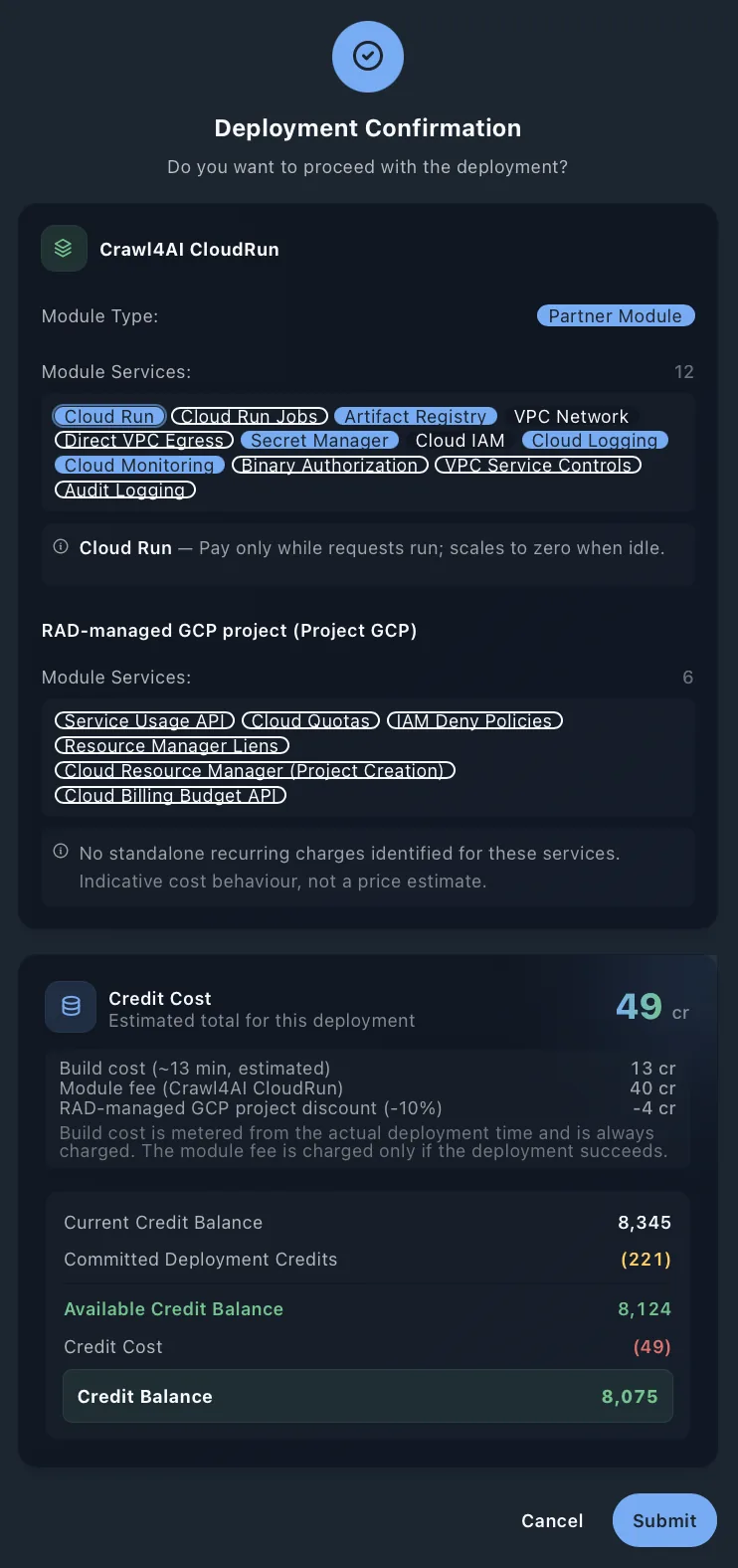
Credits are not one pot. Where a credit came from decides when it expires, and RAD spends the soonest-to-expire first: awards, then event credits, then subscription, then bought credits.
Signup and monthly credits, plus 10 per referral, up to ten a month. They refresh on the first of the month and do not accumulate: an unspent balance is replaced.
Claimed with a code from a RAD partner event. They expire on the code's own date, and they do not pay for Google Cloud usage in a project RAD manages.
Granted when a plan payment succeeds, and unused credits currently roll over. A failed card does not sweep them: only a successful renewal could ever reset this balance.
Credits you purchase as a one-off never expire: no code path that resets a balance can name this one. Subscriptions buy credits cheaper, so top up when a plan runs out.
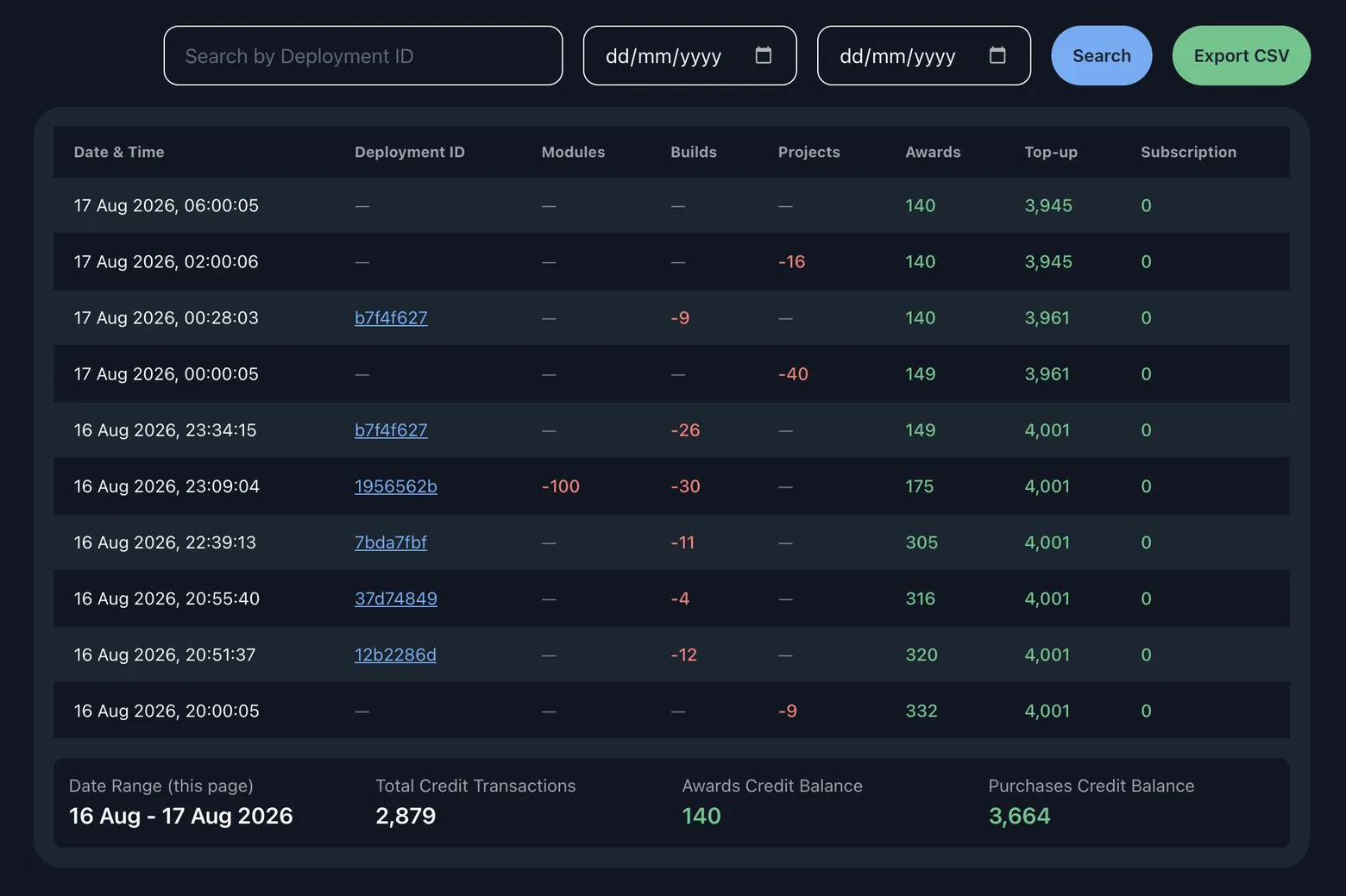
A solution deploys several applications as one dependency-ordered unit, and the module fees are discounted by its size.
The module fees are reserved as a single sum, and your balance is checked against the whole estimate including build time, before the first member starts building, so you cannot run out mid-deployment. In a project RAD manages, the 10% managed-project discount applies on top of the bundle discount. The confirmation screen itemises every member, applies the discounts and shows the resulting balance.
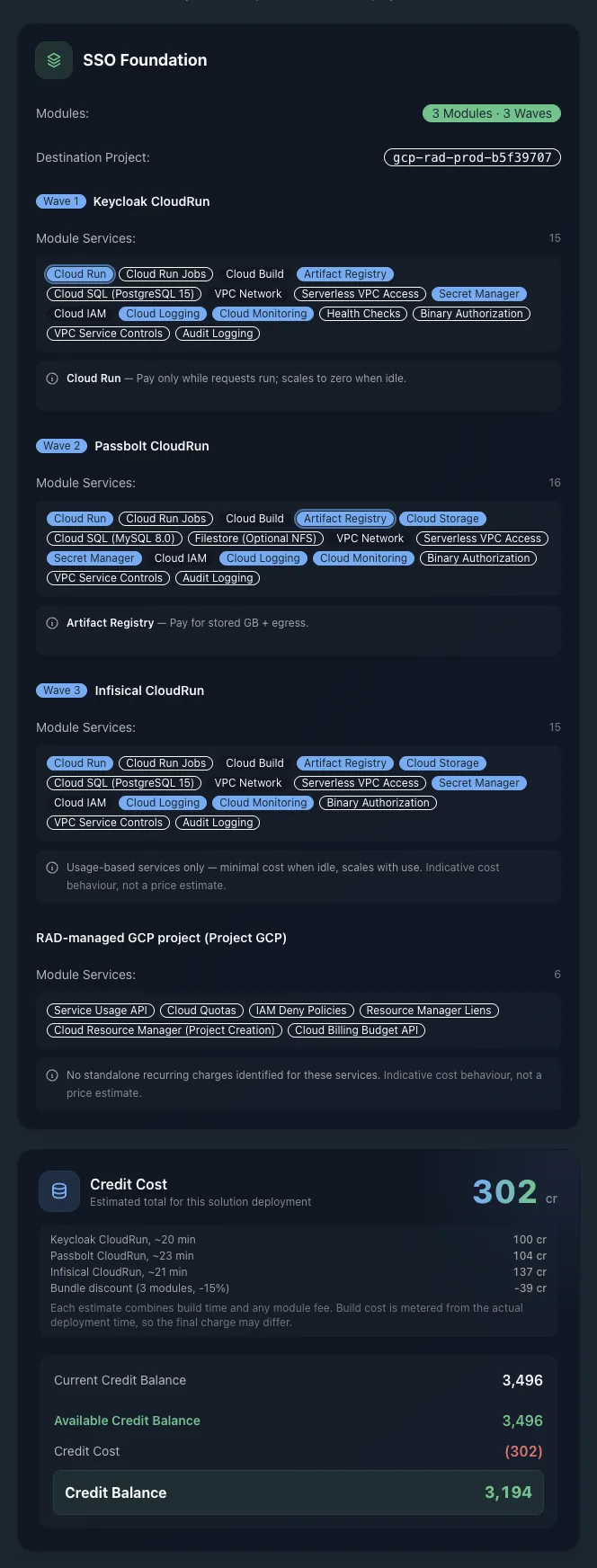
You can deploy into a project RAD creates and governs for you, in one of eight regions, instead of bringing your own. That arrangement has its own rules. A project you already own can instead be linked from the Linked Projects tab on the Credits page: RAD pays Google for it and debits your purchased credits hourly, at Google's list price plus RAD's margin and your VAT rate, while you keep the project, its data and full control. Finance approves each link, and a minimum purchased balance keeps it running.
A RAD-managed project is real Google Cloud infrastructure running on RAD's own billing account. You need a confirmed email address and a minimum balance of credits you have paid for; free and event credits do not count. The minimum depends on which project tier you choose. It is a balance you hold, not a charge, and creating the project adds no surcharge today.
Each tier carries a monthly Google Cloud budget that raises alerts as spend approaches and then exceeds it. Those alerts reach our administrators and finance team, not you, because the spend lands on our billing account. A Google Cloud budget sends notifications: it does not refuse an API call, and raising it does not permit more spend.
RAD pays Google for a managed project and recovers it from your balance: the project's real spend is read hourly from the billing export and converted to credits. The console's public price list shows, for each application, its module fee and what it typically costs to run per day in a managed project. Deploy into your own Google Cloud project instead and none of this applies — Google bills you directly, at your own rates.
The recharge reaches your credit ledger as a single combined row covering all your projects at once. The Project Transactions tab on the Credits page is the breakdown: one row per Google Cloud project, over a date range you choose, carrying the credits debited and the cloud cost behind them. Each row records the cost and the rate at the moment the debit ran, so the tab and the ledger always agree.
RAD is designed to disable billing on a managed project if your purchased credit balance falls below that tier minimum, or its Google Cloud usage goes unpaid, and to restore it once you top up. It checks on a fifteen-minute schedule and only ever reverses a suspension it applied itself.
You can hold one managed project in each tier at a time, so a lab project does not consume your own sandbox. All but a short, named list can be deployed into a managed project; those that cannot are named on the modules page.
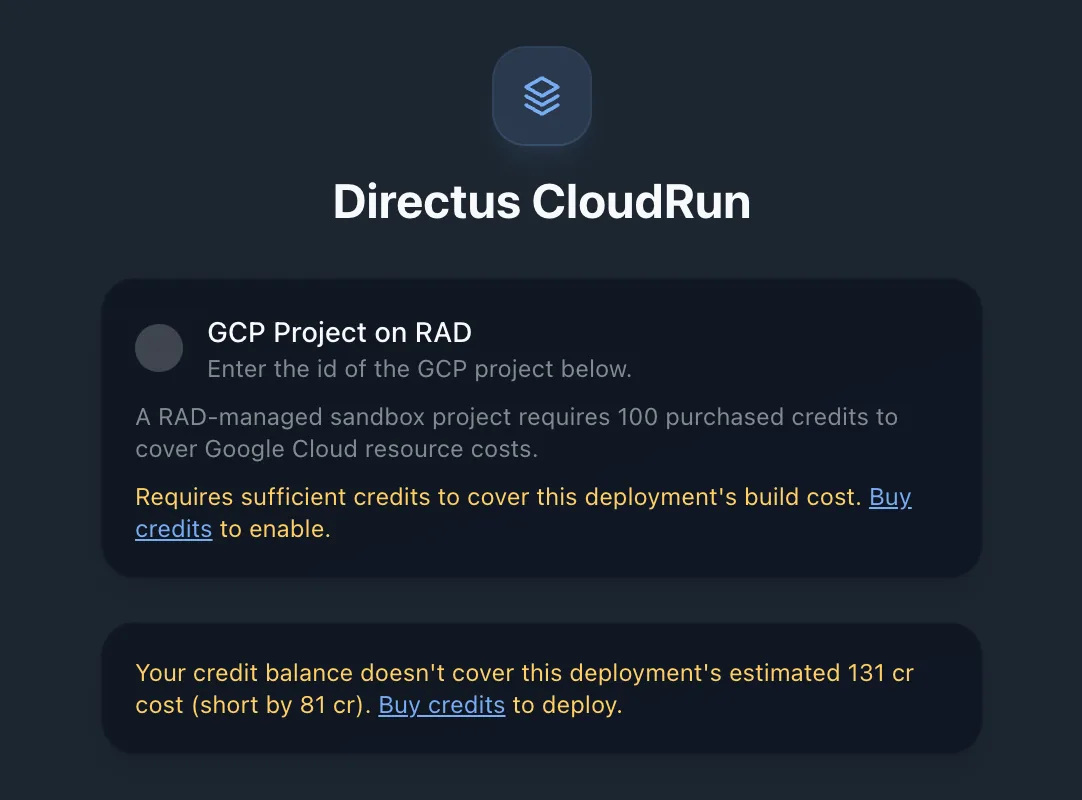
Two payment providers, chosen so that where you are does not decide whether you can buy.
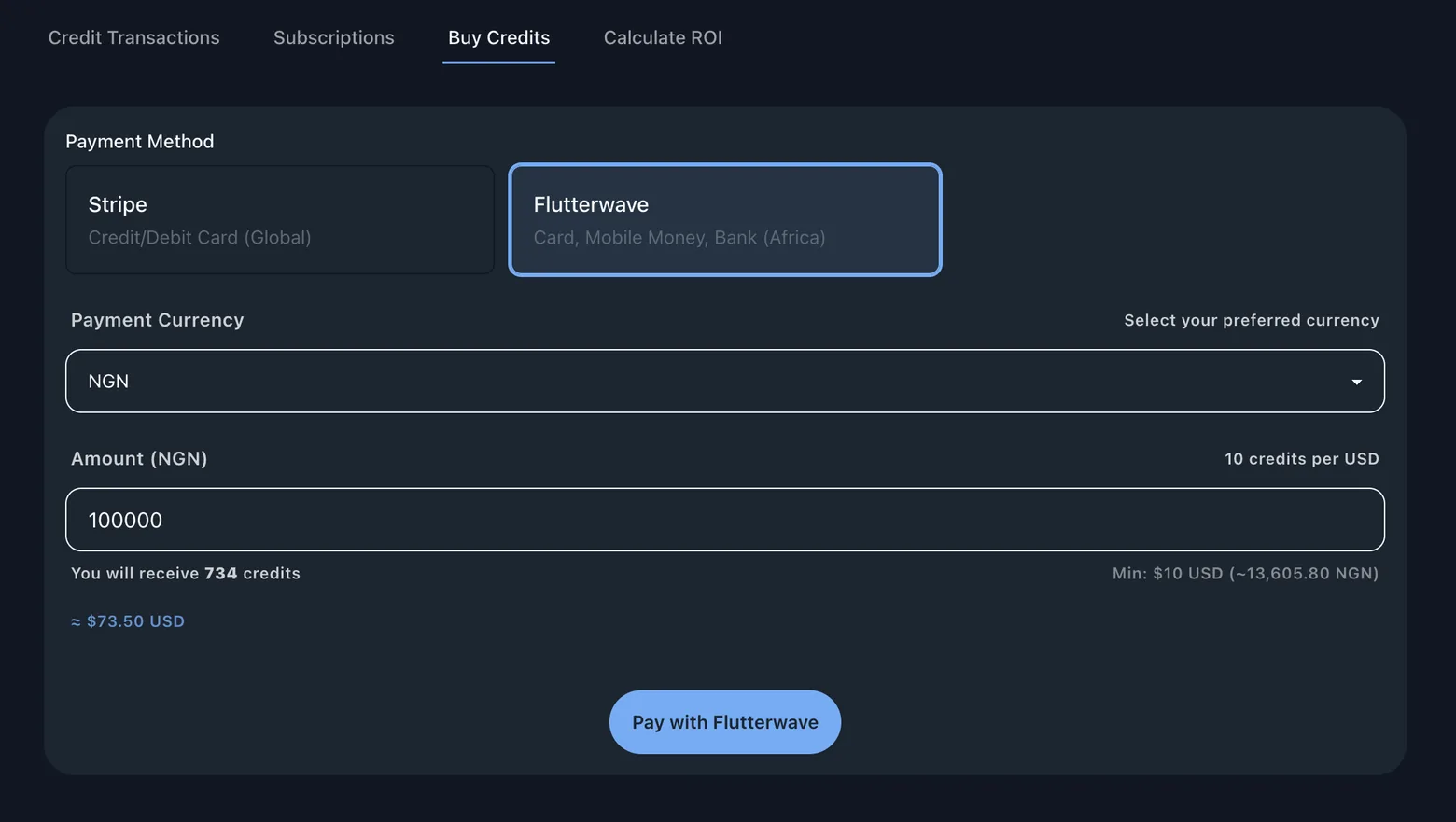
Checkout happens on the provider's own hosted page, so card details never reach RAD. Credits are granted server-side only once the provider confirms the payment, in a single transaction carrying an idempotency key. A duplicated webhook cannot grant the same credits twice.
Two things worth saying out loud.
We run a first deployment with your team and hand it over; we author a Terraform module for software you already run; or we compose a solution around a stack you describe. These are priced per engagement rather than listed. Help setting up a single catalogue module is the exception: request it from the module's card in the console, where it is listed at $50 for a Cloud Run module and $150 for GKE, unless the module sets its own price. Tell us what you need.
If you want one container running forever at the lowest monthly figure, a single-app host will beat this. RAD earns its fee when there is more than one thing to stand up, and when it has to be governed and reproducible.
There is one cloud here on purpose. Every module is Terraform, deployed into a Google Cloud project, with state in Cloud Storage. If your infrastructure lives somewhere else, this is not the product for you.
300 credits on signup, 100 more each month, no payment method. Deploy something real into your own project and see what it actually costs you.